Last updated November 17, 2026
ADU Cost Breakdown: The Enterprise Homeowner’s Reference for 2026
The gap between the $150-per-square-foot figure a homeowner finds online and the $280 per square foot on their first legitimate bid isn’t contractor markup. It’s nine cost categories the online number quietly leaves out: design, engineering, Clark County permits, utility trenching, site grading, finishes, and carrying costs on money borrowed while the build sits unfinished. That national average was never meant to price a lot in Enterprise, where soil conditions, summer heat and Nevada labor rates all push the real number higher. This guide breaks down every category in plain dollar ranges, compares the three ADU types, and shows you how to read a bid so nothing lands on you later as a surprise.
Quick Answer
A complete accessory dwelling unit (ADU – a second, smaller home on the same lot as your main house) in Enterprise runs roughly $190,000 to $420,000 in 2026, all-in. A garage conversion is the cheapest path at $85,000 to $175,000, an attached addition lands around $180,000 to $320,000, and a detached new build is the top of the range. The $150-per-square-foot number you saw online covers construction only – it excludes design, permits, utility connections and financing.
Table of Contents
- The Nine Cost Categories a Real ADU Budget Includes
- Detached Build vs. Garage Conversion vs. Attached Addition
- Line-Item Ranges: What Each Stage Actually Costs in Enterprise
- Why One Kitchen Package Costs $6,000 and Another $14,000
- How to Read a Contractor Bid and Spot What’s Missing
- Financing a $200K ADU in Nevada in 2026
- Common Mistakes to Avoid
- Frequently Asked Questions
The Nine Cost Categories a Real ADU Budget Includes
Most homeowners budget for construction and then get ambushed by the rest. Here’s the full picture, in the order costs land on a project. We’ve watched enough Enterprise builds to know that skipping any one of these categories is how a “cheap” ADU becomes an expensive one halfway through.
- Design and drafting – architectural drawings, site plan, and structural calcs. $4,000 to $15,000 depending on whether you start from a stock plan or a custom layout.
- Engineering – structural, civil, and Title 24 energy calculations. $2,500 to $7,000.
- Clark County permit fees – plan review, building permit, and school and park impact fees where they apply. $3,500 to $12,000 for a typical ADU.
- Site work – grading, clearing, and drainage. $4,000 to $18,000, higher on sloped lots.
- Utility connections – water, sewer or septic, gas, and electrical trenching and hookups. $8,000 to $25,000, the single most underestimated line on most budgets.
- Construction – foundation, framing, roofing, mechanical, electrical, plumbing, insulation, drywall. The bulk of the cost.
- Finishes – flooring, cabinets, counters, fixtures, paint. $25,000 to $65,000 depending on package tier.
- Landscaping and hardscape – patios, walkways, fencing, and yard repair after the build. $3,000 to $15,000.
- Carrying costs – interest, permit hold time, and insurance while the project is underway.
Add those up and you understand the jump from the online square-foot figure to a real bid. The construction number was never wrong; it was just one slice of the pie. Our ADU builders in Enterprise put every one of these categories on the written estimate before work begins, so the number you sign matches the number you pay.
Detached Build vs. Garage Conversion vs. Attached Addition
The three ADU types in Enterprise don’t just differ in total cost – they differ in where the money goes. A garage conversion puts very little into foundation and new framing, and a lot into insulation, egress, and finish work. A detached new build is the reverse.
Detached new build
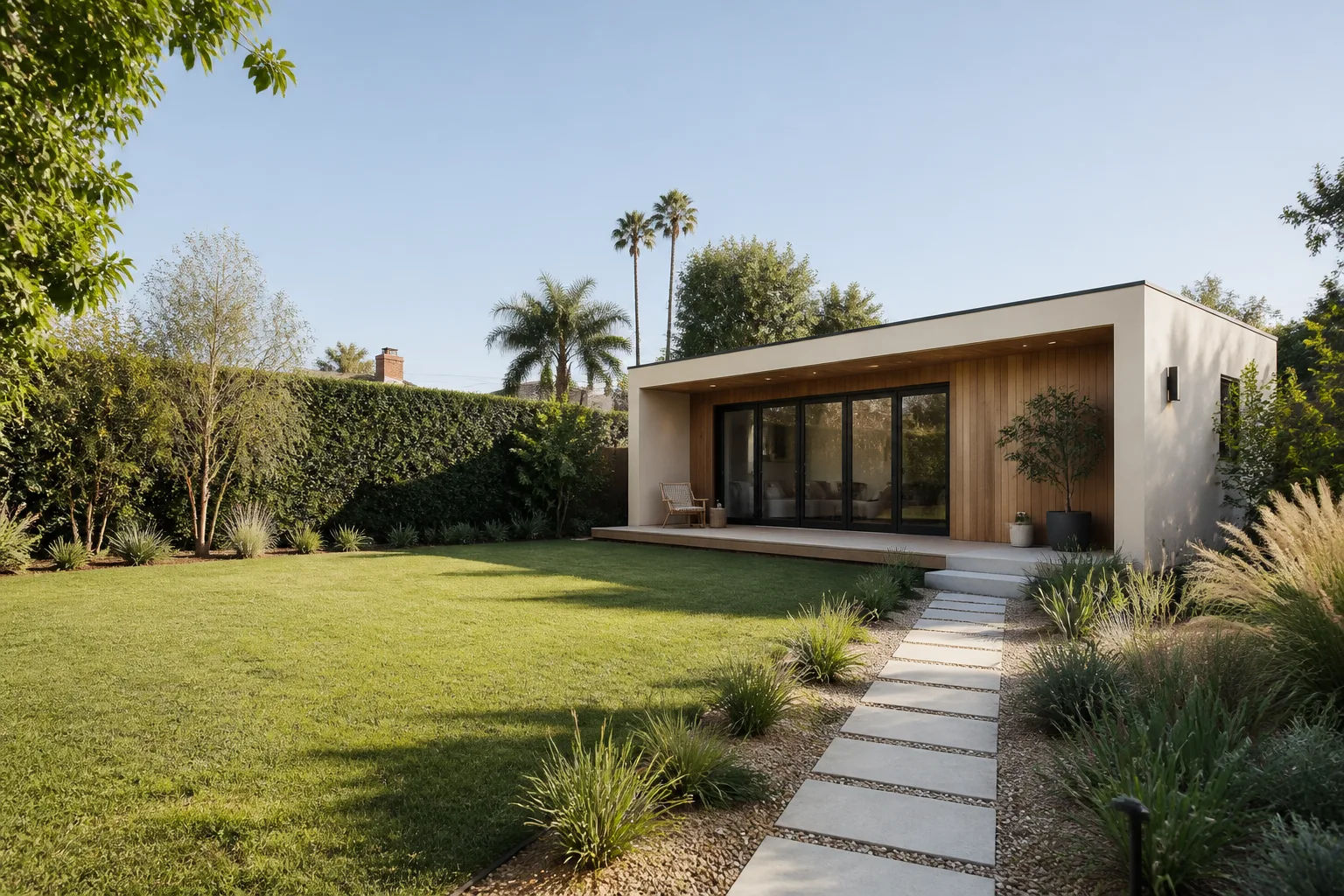
Roughly $250,000 to $420,000 for an 800 to 1,000 square foot unit. You pay for a new foundation, full framing, a new roof, and complete utility runs from the street. It’s the most expensive type, but it’s also the cleanest blank slate – you can work with a prefab panelized system from a manufacturer like Dvele or Cover and cut build time, or frame it from scratch if you need a custom layout.
Garage conversion
Roughly $85,000 to $175,000. You keep the existing slab and walls, which saves a large chunk on foundation and framing. The money shifts into insulation (garage walls aren’t built to living-space standard), new windows and doors, egress, a fire separation between the ADU and any remaining garage, and full mechanical and electrical. This is often the fastest path for an Enterprise homeowner who already has a detached garage sitting underused. See our garage conversion contractor in Enterprise page for the specifics of how it plays out on a residential lot.
Attached addition
Roughly $180,000 to $320,000. Attaching to the main house can save on utility runs since water and power are already close, but it brings structural tie-in costs, roof blending, and more complicated permit review. It’s a good choice when you want the ADU to feel like part of the house. If you’re weighing this against a larger expansion, our home addition contractor in Enterprise page covers the tradeoffs.
Line-Item Ranges: What Each Stage Actually Costs in Enterprise
Here’s the breakdown in a table-style list you can carry to any bid conversation. These ranges reflect Clark County labor and material costs in 2026 – they are not national averages, and they assume a buildable lot without major surprises.
- Design and engineering (combined): $6,500 to $22,000
- Clark County permit, plan review and impact fees: $3,500 to $12,000
- Site work, grading and drainage: $4,000 to $18,000
- Utility trenching and connections: $8,000 to $25,000
- Foundation and slab: $10,000 to $28,000
- Framing and structural: $28,000 to $58,000
- Roofing: $8,000 to $18,000
- Mechanical, electrical, plumbing: $22,000 to $48,000
- Insulation and drywall: $9,000 to $22,000
- Kitchen package: $6,000 to $14,000 (more on why below)
- Bathroom package: $5,000 to $12,000
- Flooring, paint and trim: $6,000 to $16,000
- Landscaping and hardscape: $3,000 to $15,000
In Enterprise, the summer heat is a real line-item driver. Pouring a slab in July means scheduling work earlier in the day, tracking concrete cure times carefully, and factoring in additional labor hours for temperature control – small things that add up across a project. A bid that ignores them will come back for more later. A written line-item quote from a licensed, insured builder captures all of this up front.
Why One Kitchen Package Costs $6,000 and Another $14,000
The most common question we get on a walkthrough is why two ADUs that look identical on a plan come back with wildly different finish budgets. It isn’t arbitrary – it comes down to a handful of decisions, each of which has a real dollar sign attached.
- Cabinet construction: stock particleboard boxes with melamine doors cost a fraction of plywood boxes with soft-close hardware and painted fronts. The $6,000 kitchen is stock; the $14,000 kitchen is semi-custom, and the difference is measurable in how it holds up over a decade.
- Countertop material: laminate vs. quartz vs. granite spans roughly $30 to $120 per square foot installed. A 25-square-foot kitchen counter can swing the budget by $2,000 on that choice alone.
- Appliance package: builder-grade white appliances vs. mid-tier stainless runs $1,800 to $6,000. A rental-focused ADU doesn’t need the same package as a family unit.
- Fixture quality: faucets, sinks, and lighting fall into “will last fifteen years” or “will need replacing in five” tiers – and the gap is smaller than most homeowners expect.
- Layout complexity: an L-shaped kitchen against two walls is straightforward; a galley that requires moving a drain stack is not.
Prefab ADU systems from manufacturers like Mighty Buildings or Boxabl come with their own finish tiers pre-selected, which can simplify the choice but also constrain it. If the goal is a rental unit, we usually steer homeowners toward a durable mid-tier package that holds up to tenant wear. If the goal is a parent moving in, the spend often shifts toward accessibility – wider doorways, a roll-in shower, lever handles. The point is to decide what the ADU is for before the finish package locks in. That single decision moves the total by $15,000 or more.
How to Read a Contractor Bid and Spot What’s Missing
A bid that’s $40,000 cheaper than the next one isn’t a bargain – it’s usually the same project with four categories removed. Here’s how to check one before you sign anything.
- Look for a permit line item. If the bid doesn’t mention pulling permits, either the contractor isn’t pulling them (which becomes your liability) or they’re buried somewhere vague. Ask directly whether the price includes permit fees and inspection scheduling.
- Find the utility scope. Does the bid specify trenching, water line, sewer lateral, gas, and electrical hookup – each named? If it just says “utilities,” that’s a blank check.
- Check the finish schedule. A complete bid names the cabinet line, the countertop material, the flooring product, and the appliance package. “Kitchen allowance” without a number is not a price.
- Read the change-order language. Ask, in writing, how change orders are priced. A contractor who won’t limit or define change-order costs is one who plans to use them.
- Confirm the timeline commitment. A real bid states a start window and a substantial completion date. Vague promises (“roughly four months”) are how projects slip to seven.
- Look for the warranty in writing. Ask what happens if a line item fails in the first year – who pays, and how fast do they return.
The single best filter for a bid is whether the written price matches the scope item for item. At Lodgewick, the written price is on the page before a single nail is driven, and the arrival window is defined, not estimated. That’s how The Kingswell Way works: say the price before the work, show up in the window given, leave the site cleaner than we found it, put the guarantee in writing, and come back if anything fails within 365 days. No one here expects you to take our word for it – ask for the written guarantee on every bid you collect, ours included.
Financing a $200K ADU in Nevada in 2026
How you pay for the ADU matters almost as much as what it costs. On a $200,000 project, the difference between a comfortable HELOC and a rushed construction loan can be tens of thousands of dollars in interest over the build life. Here are the three main paths Nevada homeowners are using in 2026.
Home equity line of credit (HELOC)
A HELOC lets you borrow against the equity in your main house, usually at a variable rate, and draw funds as the build progresses. For an Enterprise homeowner with strong equity, it’s often the cheapest route – you only pay interest on what you’ve drawn. The catch is rate variability and lender comfort with the project scope; some lenders want to know the ADU is a permitted, permanent improvement, which it will be if the permits are pulled correctly.
Construction-to-perm loan
This is a single loan that starts as a construction loan (drawn in stages, or “draws,” as work hits milestones) and converts to a standard mortgage once the ADU is complete and passes final inspection. It’s a good fit for homeowners who don’t have deep equity, or who want a fixed rate locked in from the start. Expect more paperwork and a lender who wants to see your contractor’s license, insurance, and the full permit set before closing the loan.
Cash-out refinance
Rolling the ADU cost into a new primary mortgage. This works when rates make sense on the refinance, and it’s simplest to manage – one payment, one loan. It only makes sense if the current rate environment beats what you’d pay on a HELOC. Ask for a side-by-side of the total interest over ten years on each option; the difference is often larger than homeowners expect.
On a $200,000 project, current rates translate to a monthly carrying cost in the rough range of $1,300 to $1,900 depending on term and product. If the ADU will be rented, that monthly payment is often offset by the rent itself – which is why the finish tier and rental intent need to be decided before the loan is sized. Sit down with a lender before you sign a builder bid, not after.
Common Mistakes to Avoid
- Budgeting from the online square-foot figure. The $150 per square foot number excludes permits, utilities, design and financing. Budget from the full nine-category list, not the construction slice. In Enterprise, the utility line alone can be $25,000 on a lot with an inconvenient sewer connection.
- Skipping a soil or site review. Enterprise lots range from flat and easy to fill-heavy and sloped. A $600 soil report can save you $20,000 in foundation surprises when the excavation starts.
- Choosing the lowest bid without comparing scope. A low bid is only low if it covers the same work. Line up the scope side by side before you compare the totals – the cheap bid often becomes the expensive project.
- Not confirming permits. Every ADU in Clark County needs a building permit. A contractor who suggests skipping it to “save time” is setting you up for a resale problem and, often, a demolition order.
- Locking the finish package before deciding the ADU’s use. A rental gets a durable mid-tier kitchen; a family unit or aging-parent suite pulls budget toward accessibility. Decide the purpose first, then the finishes.
- Signing a bid without a written change-order cap. “We’ll figure out the change order price later” is how a $200,000 ADU becomes a $260,000 one. Get the change-order method in writing.
- Forgetting the summer heat schedule. Concrete work in Enterprise in July needs early-morning pours and careful cure scheduling. A bid that ignores the seasonal labor premium will be revised once work starts.
When to Call a Professional
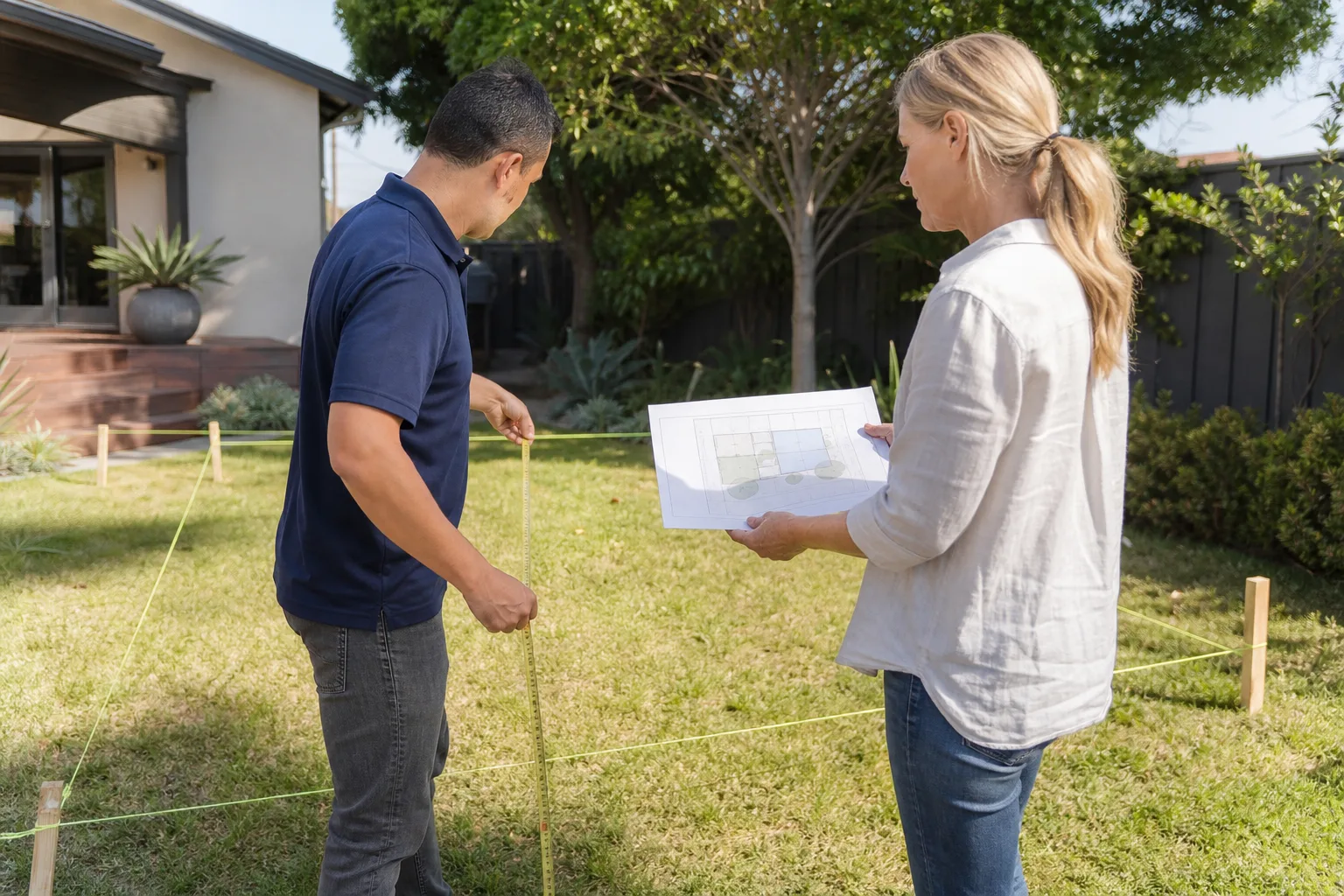
Call a licensed ADU professional once you’ve sketched the rough plan and want a real number. If you’re comparing garage conversion versus detached build, a walkthrough gets you an accurate range in a single visit. If a contractor’s bid looks low, have it reviewed before you sign – we’ve caught missing permit and utility lines on bids more than once. And if you’re already mid-project and the budget has crept up without a written change order to justify it, that’s a moment to get an independent read.
The dangerous parts of an ADU build – gas line connections, main electrical panel work, and any structural alterations to a load-bearing wall – should always be handled by a trained, licensed professional. We don’t recommend homeowners attempt those steps themselves.
Lodgewick ADU Builders Enterprise offers free estimates in Enterprise – call (855) 812-7727 to schedule a walkthrough. Our technicians have up to 16 years of experience, and every estimate includes a written price and a defined arrival window. A live person answers every call, 24 hours a day, seven days a week – no voicemail, no chatbot.
Frequently Asked Questions
A complete ADU in Enterprise runs roughly $190,000 to $420,000 all-in for 2026. Garage conversions land at $85,000 to $175,000, attached additions at $180,000 to $320,000, and detached new builds at the top of the range. That total includes design, permits, site work, utilities, construction, finishes and carrying costs – not just the construction slice the online square-foot figures report.
Call (855) 812-7727 for an exact quote on your lot – estimates are free.
Because the $150 figure is construction only, and usually a national average rather than an Enterprise one. It excludes design, engineering, Clark County permit and impact fees, utility trenching, site grading, finishes and financing. Add those categories and a real Enterprise ADU typically lands between $250 and $420 per square foot depending on type. Any bid that only quotes construction cost is showing you part of the picture.
Yes – usually by $100,000 or more. A garage conversion keeps the existing slab and walls, so you save on foundation and framing, and the money goes into insulation, egress, fire separation and mechanical rather than new structure. It’s the most cost-effective way to add livable space on an existing Enterprise lot when the garage is detached and in sound condition. The tradeoff is that the square footage is fixed by the garage footprint.
Yes. Every ADU in Clark County requires a building permit and plan review, and a proper build will pass inspection before final signoff. Permit and impact fees typically run $3,500 to $12,000 on an Enterprise project. Skipping the permit creates a resale problem and, in most cases, a much bigger cost later – we’ve never seen it work out well, and we price permits into every bid we write.
It shouldn’t – not if the bid was written as a complete scope. The written price we put on the page before work begins is the number you pay, with change orders priced only for work you actually add. A bid that invites “surprise” change orders is one where the scope was incomplete from the start. Ask any contractor for the change-order method in writing before you sign.
We work with leading prefab and panelized ADU systems including Cover, Dvele, Mighty Buildings and Boxabl, alongside established materials suppliers like James Hardie, and we match the system to your lot, budget and timeline. A prefab system can cut build time; a site-built project gives you room to customize the layout. Either way, every project under The Kingswell Guarantee comes with a written price before work starts, a defined arrival window, a clean job site, and a written guarantee with a free return visit if anything fails within the 365-day guarantee period.
Call (855) 812-7727 for a free estimate – a live person answers every call, 24 hours a day.
The Bottom Line
The online square-foot figure was never a lie – it was just the construction slice of a bigger pie. Once you add design, engineering, Clark County permits, utility connections, site work, finishes and the interest on money borrowed during the build, the total lands where it actually lands: roughly $190,000 to $420,000 for a complete Enterprise ADU, with garage conversions at the low end and detached builds at the top. The right next step isn’t picking a contractor – it’s getting one written, line-item bid you can hold every other bid up against. Get the price in writing, ask what’s missing, and require the guarantee in writing too. That’s the entire game.
Lodgewick ADU Builders Enterprise puts the full price on the page before a single nail is driven, with no change-order surprises. Call (855) 812-7727 to schedule your free estimate and start your Enterprise ADU with a real number in hand. For background on where we started the conversation, see the Lodgewick ADU Builders Enterprise home page.
Written by the team at Lodgewick ADU Builders Enterprise.