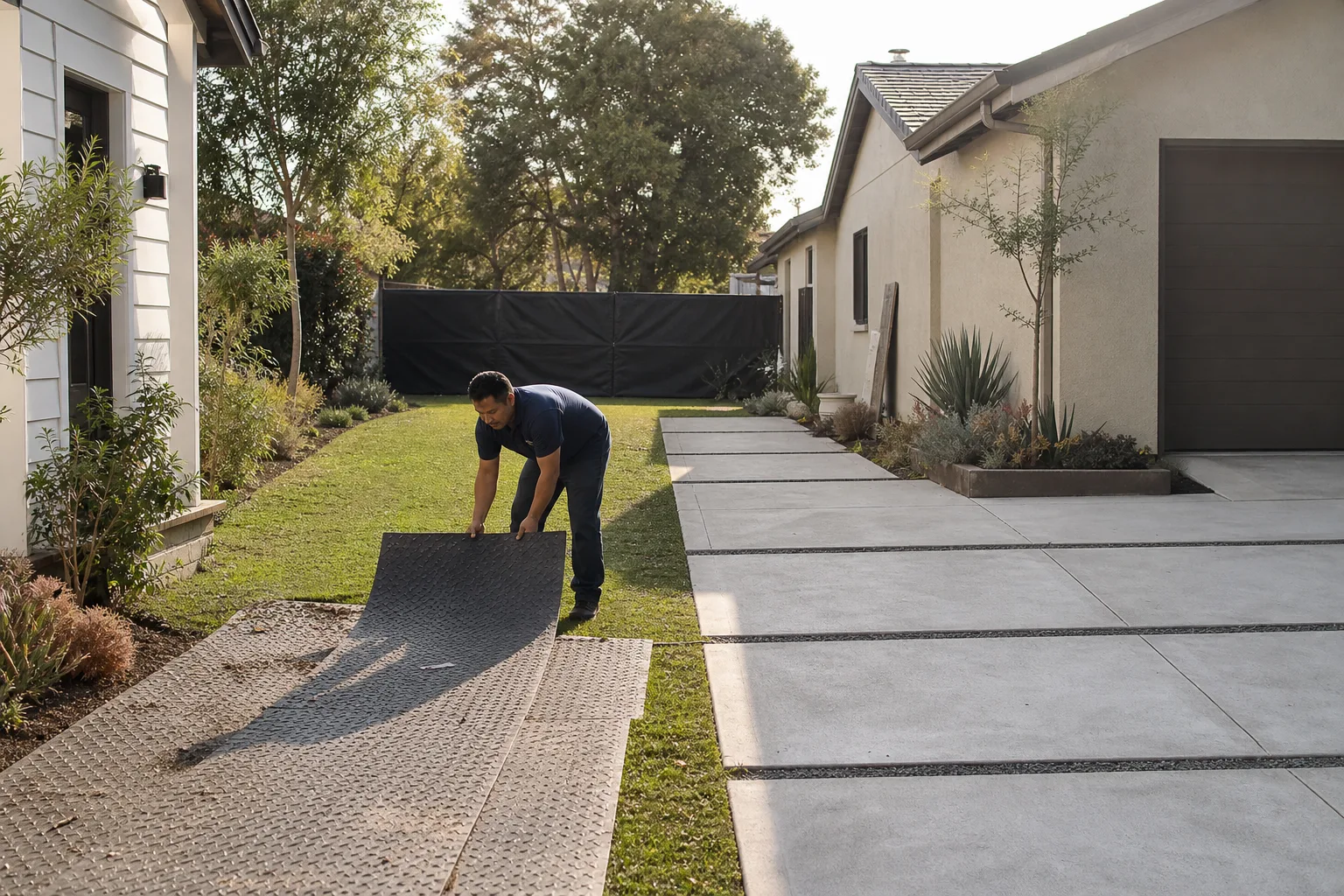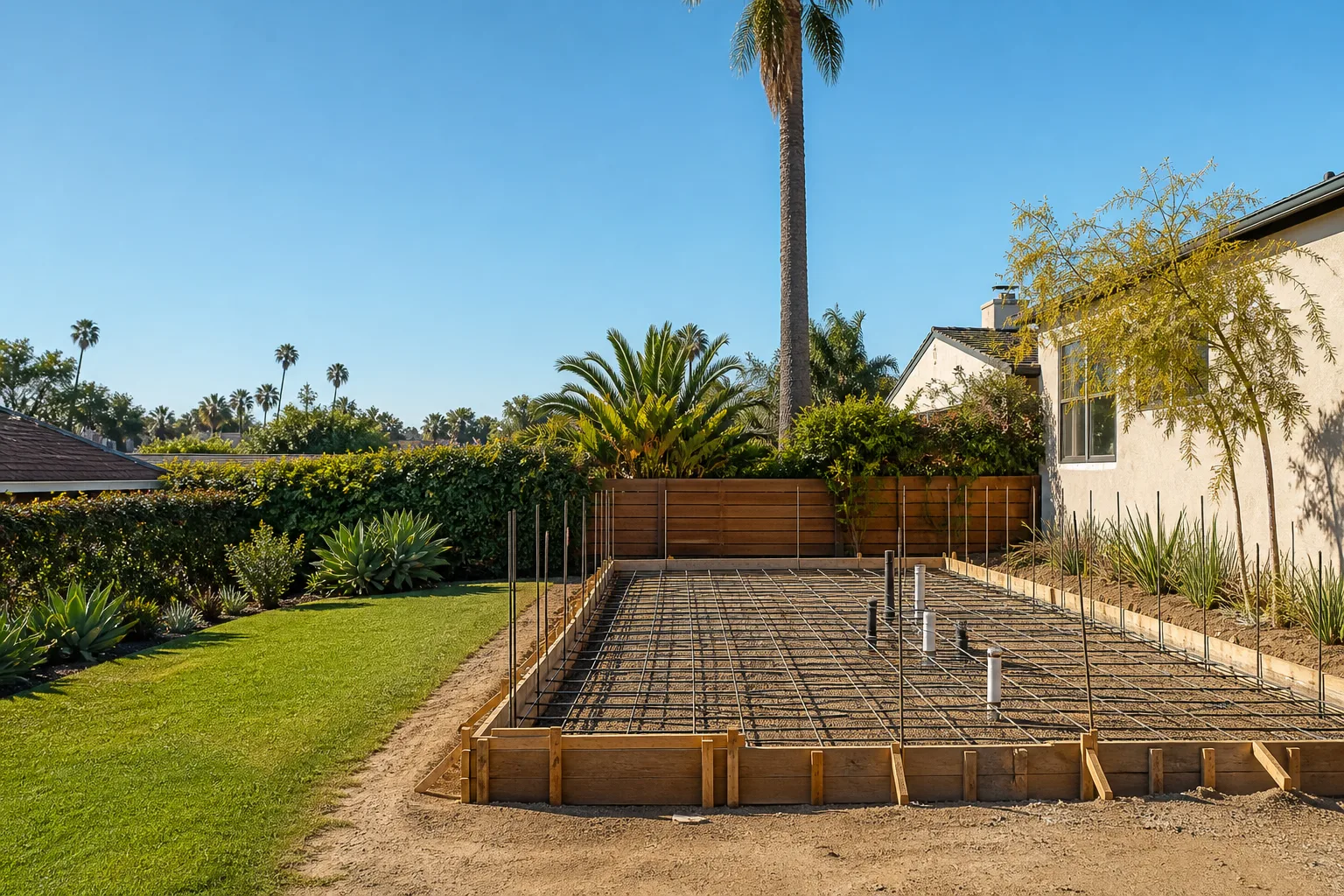

Cover Site Prep & Utilities: The Enterprise Owner’s Guide
We install Cover-compatible site prep and utilities in Enterprise, and the work that matters most is what happens before the Cover modules ever arrive: the pad, the trenching, the electrical run, the water and sewer tie-ins, and the grading that keeps water moving away from the structure. Most Enterprise owners spend $6,500 to $18,000 on site prep and utility work, depending on how far the utility runs travel and what the lot looks like. Site prep isn’t a same-day job, so we don’t pretend it is. We give you a written price before work starts and a defined arrival window, and we hold to both.
Owners usually find out something is wrong with site prep the hard way. The pad heaves after a wet winter. The trench floods. A panel trips the moment the Cover unit’s systems go live. Or an inspector flags the grading before final sign-off. A lodge is a small house on a larger property, and the ground under it decides whether that small house lasts in Enterprise’s soil and heat.
Key Takeaways
- Site prep and utilities for a Cover unit in Enterprise run about $6,500 to $18,000 installed, depending on run length and soil.
- The two most common failures we correct are undersized electrical service and grading that sends water toward the pad instead of away from it.
- Lodgewick works with Cover and other established ADU brands (we also service Abodu and Dvele units) matched to your lot and timeline.
- Every job carries a written price before work begins and The Kingswell Guarantee, including a free return visit if the work fails within 365 days.
- We’re an independent service provider, not affiliated with Cover. We work with Cover-compatible site work on Cover units.
Which Cover Models This Applies To
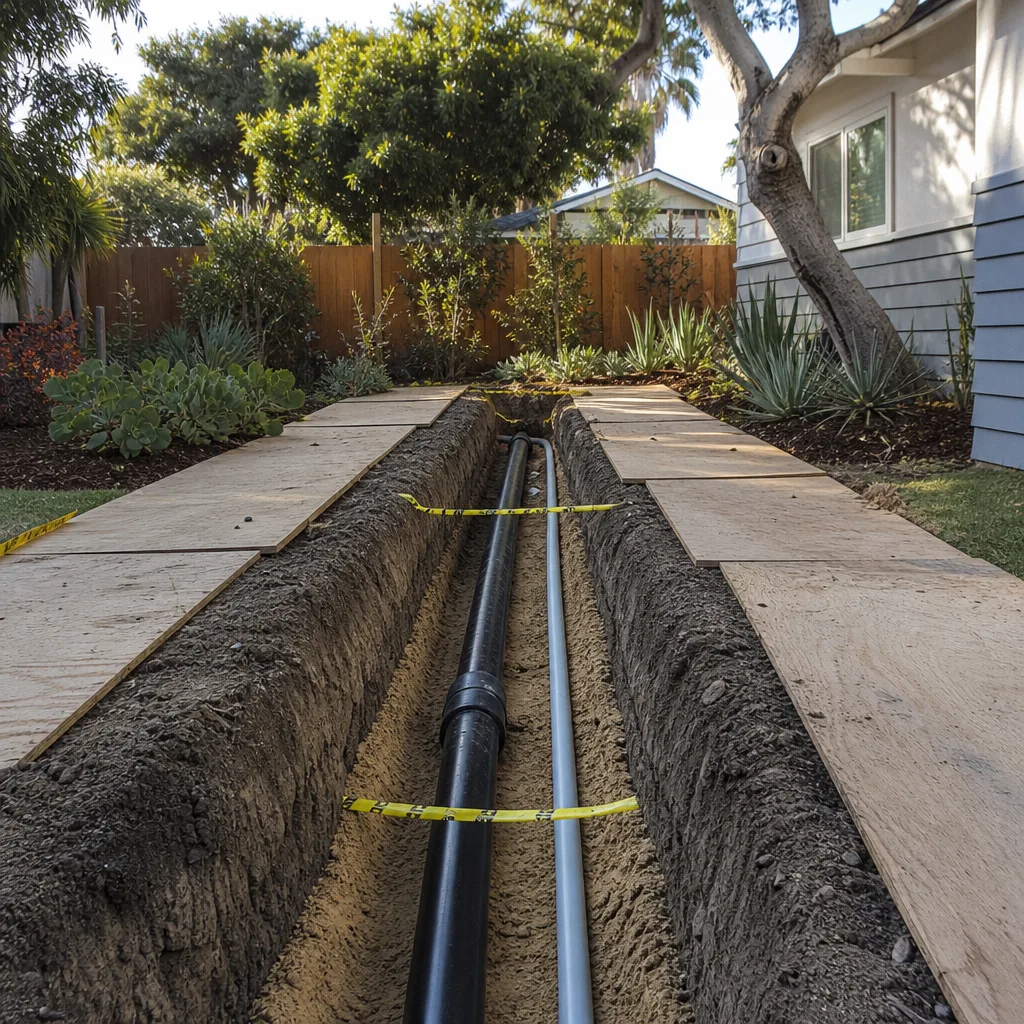
Site prep scopes differ across Cover’s model lines, so we confirm your exact unit before ordering a single material. Cover’s smaller studio and one-bedroom configurations need less pad footprint and often a lighter electrical service than the larger two-bedroom units with full kitchens, and the utility loads shift the whole plan. We ask for the model name, the panel label, and the utility schedule Cover provides with your unit. That schedule is the document that tells us the service amperage, the water line size, and the connection points. We don’t guess at it.
The compatibility gotcha that catches Enterprise owners: a Cover unit’s electrical schedule may call for a specific service size that your existing panel can’t support without an upgrade. The building department will flag it, and you can’t shortcut it. We check the panel label and the unit’s requirements before proposing the trench and pad work, so the electrical upgrade doesn’t surface as a surprise line item mid-project.
On the OEM-versus-aftermarket question, site prep doesn’t work like a part you bolt on. Pad materials, conduit, and service components are largely commodity items where spec matters more than brand. What does matter is match: using the conduit size and pad thickness Cover’s install guide calls for keeps your unit warranty clean and your inspection passing. We source to spec, not to a logo. When a Cover-specific component is required, we tell you and we price it honestly.
Signs Your Cover Site Prep & Utilities Is Failing
- Water pooling against the base of the unit after rain. The pad or grading has settled or was never sloped away from the structure. In Enterprise, where the soil can shift with the wet-dry cycle, a pad poured without proper slope will pull water toward the unit within a season or two.
- Breakers tripping when the unit’s systems start. The electrical service is undersized or a connection point is loose. This is the single most common utility failure we find on Cover installs, and it’s dangerous enough that we treat it as a stop-and-fix item, not a wait-and-see.
- Soft spots or cracking in the concrete pad. Base compaction was skipped or the slab was poured too thin for the unit’s point loads. Cracking that follows a straight line or a corner usually means the subgrade wasn’t prepped to spec.
- Slow drains or gurgling at the unit’s plumbing. A sewer or gray-water tie-in has a slope problem or a partial blockage. This shows up as gurgling first, then backups. Catch it early and the fix is a re-slope; wait and it’s a re-trench.
- Standing water in a utility trench or at the panel. The trench wasn’t graded to drain, or the conduit wasn’t sealed at the ends. Water in a conduit run is a slow-motion electrical problem and needs to come out fast.
Replacement Cost & What’s Included
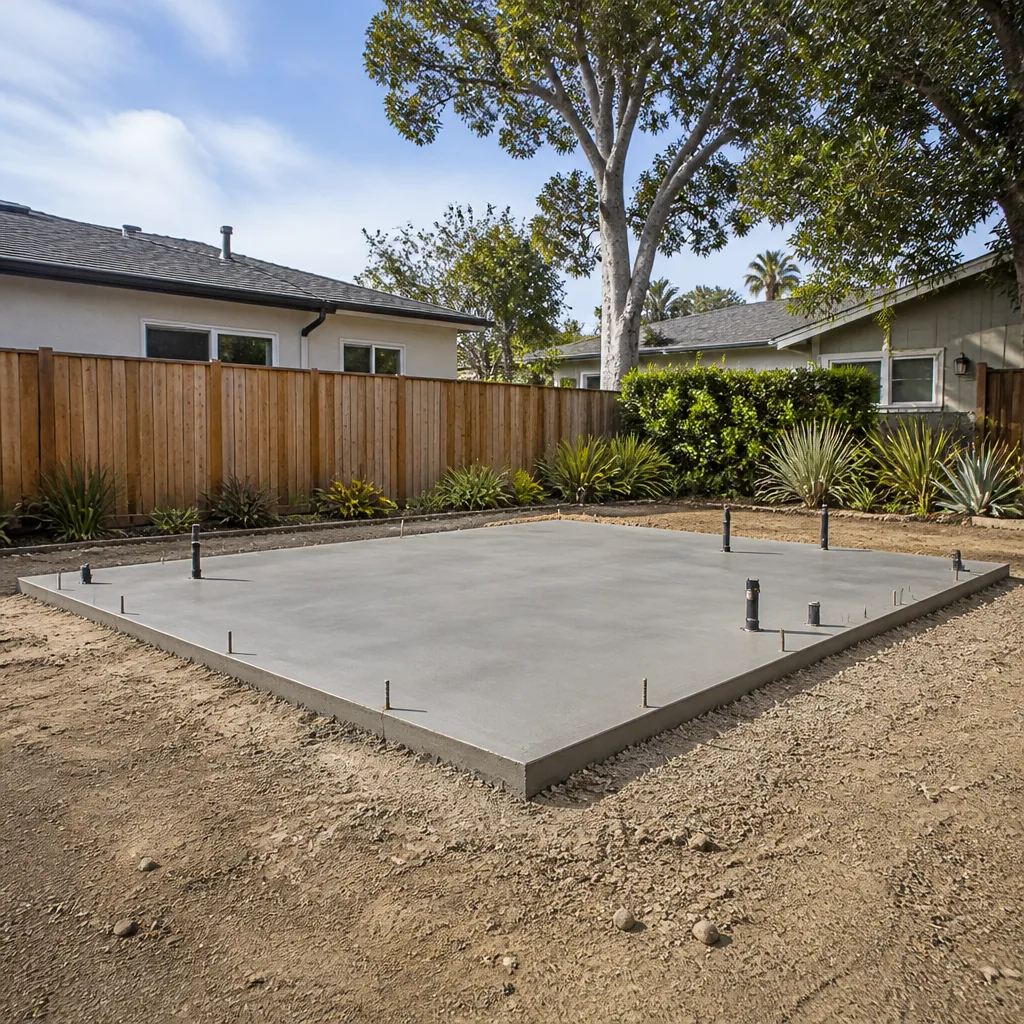
Here’s what site prep and utility work costs in Enterprise, with the line items owners actually see:
- Pad prep and pour (grading, compaction, slab): $3,000 to $7,500, depending on footprint and how much grading the lot needs.
- Electrical service run and panel work: $2,000 to $6,000, with the upper end driven by a service upgrade or long trench runs.
- Water and sewer tie-ins: $1,200 to $3,500, depending on distance to the connection point and trench depth.
- Grading and drainage correction: $800 to $2,400, including re-slope and any drain or swale work.
What drives the range is run length, soil conditions, and whether your existing panel needs an upgrade. We give you a written price before any work starts, with parts and labor broken out, so you can see what you’re paying for. Every job carries The Kingswell Guarantee: if the work isn’t right within 365 days, we come back and make it right, free, and that’s in writing on every project.
DIY or Call Us?
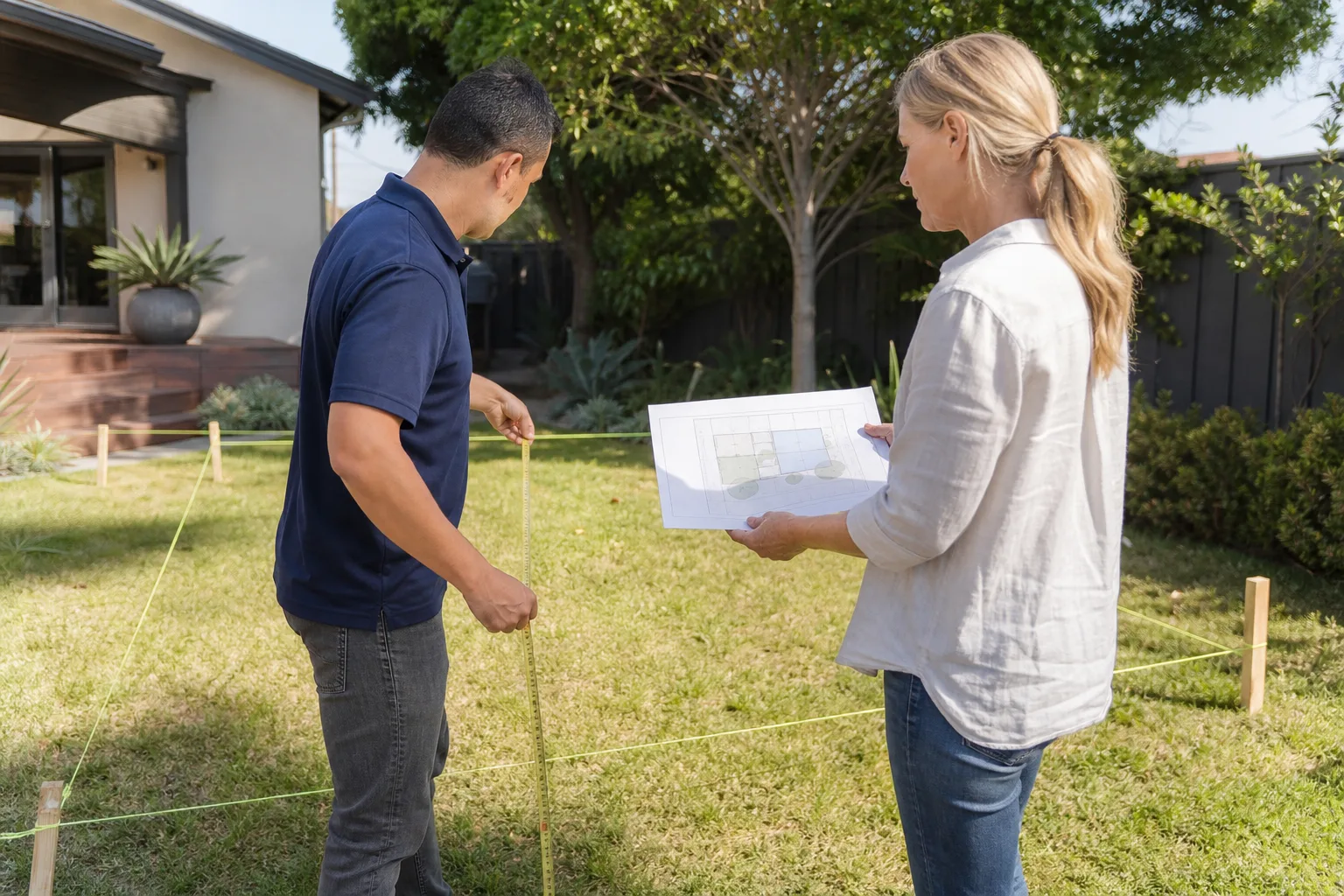
Some of this you can safely check yourself. Walk the pad after rain and note where water sits. Look at the panel label and compare it to the service size Cover’s utility schedule calls for. Check for cracking or soft spots near the unit’s corners. That’s poking around, and it’s fine.
Here’s where DIY goes wrong: underground electrical and sewer tie-ins are not a weekend project, and the failure modes are serious. A trench that looks fine but doesn’t drain turns into a conduit full of water and a live electrical hazard. A sewer tie-in with the wrong slope backs up inside the unit a month after you button it up. And the inspection will catch it, which means you pay twice. Site prep and utilities are trench-and-tie-in work that ends up under ground and behind walls, and that’s exactly the kind of work that has to be done right the first time. Our technicians have up to 16 years of experience with this work. Call (855) 812-7727 and let’s get a written scope in front of you before you start digging.
FAQs
The pad and utility infrastructure should last as long as the unit itself, decades, if it was graded and poured to spec. Failures we see in Enterprise are almost always installation problems: a pad poured without compaction, a trench not graded to drain. Done right the first time, it holds. Call (855) 812-7727 and we’ll walk your lot and tell you what yours needs.
Sometimes, yes. A grading correction or a re-sealed conduit is a repair. A failed slab that’s heaved or cracked through is a replacement, because patching the surface doesn’t fix the subgrade underneath. We inspect first, then quote the repair honestly and tell you when replacement is the real answer. Call us for an exact quote; estimates are free.
Most Site prep and utility re-work in Enterprise runs five to twelve working days, depending on run length and whether a panel upgrade is involved. We give you a defined arrival window and a written schedule before we start, and we don’t leave a trench open overnight. Call (855) 812-7727 to schedule your free estimate.
We source to Cover’s spec: the conduit size, pad thickness, and service components the install guide and utility schedule call for, so your unit stays within warranty and passes inspection. We’re an independent service provider, not affiliated with Cover, and we’re upfront about which components need to be Cover-specific and which are standard materials. Call and we’ll lay it out in writing.
Written by the team at Lodgewick ADU Builders Enterprise, serving Enterprise and nearby areas.