Last updated November 17, 2026
DIY vs Professional Home Addition Contractor: What’s Safe to Do Yourself
In Nevada, a homeowner can legally act as their own general contractor on their own house. That single fact tempts a lot of people into thinking they can also swing the hammer on framing, wiring, and plumbing. Here’s the part that bites: the moment you sell, unpermitted structural work you did yourself can kill the deal, stall a lender, or come back as a lawsuit years later. This guide maps the real line between work you can safely self-perform in Enterprise and work that puts your house, your insurance, and your wallet on the hook. You’ll learn what Nevada owner-builder law actually lets you do, which Clark County inspections you can’t skip, and how to split a project so the county approves it.
Quick Answer
Finish work is fair game for most homeowners: painting, cabinet hardware, trim, tile in dry areas, and landscaping. Structural, electrical, and plumbing work is not. Nevada law lets you self-perform on your own residence, but load-bearing changes, panel work, and waterproofing in wet zones require a licensed trade and county inspection. Get those wrong and you risk everything from a failed appraisal to a revoked insurance claim. Everything structural needs a licensed contractor who pulls permits and passes inspections. In Enterprise, where the housing stock ranges from 1990s subdivisions to newer builds, that boundary stays the same no matter the age of the house.
Table of Contents
- What Nevada owner-builder law actually permits
- Clark County permits and inspections you cannot skip
- Three tasks that look simple but cause expensive problems
- DIY finish work vs. licensed structural work: the honest math
- How to split a project so the county inspects and approves
- What’s genuinely safe to do yourself in Enterprise
- Common mistakes to avoid
What Nevada Owner-Builder Law Actually Permits
Nevada’s owner-builder exemption lets a homeowner act as their own general contractor on a residence they own and occupy. You can hire subcontractors, pull permits in your own name, and manage the build. You can also do some of the labor yourself. What the law does not do is erase the licensing requirement for trades that require one. Electrical, plumbing, and mechanical work in Nevada requires a licensed contractor, and self-performing that work on your own home often walks straight into a licensing violation.
The exemption covers the general contract, not the trades. Read that again, because it’s the part most DIY guides skip. You can be your own builder and still not be allowed to wire your own addition. Here’s how the split usually shakes out in Enterprise:
- You can generally self-perform: interior painting, cabinet installation, trim carpentry, flooring over a properly prepped substrate, finish landscaping, and hardware.
- Requires a licensed trade and permit: any new or altered electrical circuit, panel changes, plumbing rough-in or relocation, gas line work, HVAC ducting or equipment, and any structural framing or wall removal.
- Voids or complicates insurance: unpermitted structural work, unlicensed trade work that causes a fire or water loss, and additions that aren’t on record with the assessor.
One more nuance that catches people: when you pull owner-builder permits in Clark County, you sign disclosures stating you intend to occupy the home. If you sell within a year, some buyers and lenders treat that as a red flag and start asking questions. That’s not about being a bad builder. It’s about the paper trail. And the paper trail is what lenders and insurers inspect when money and risk are on the line. The safest structural path in Enterprise is a licensed contractor who owns the permit and the warranty.
Clark County Permits and Inspections You Cannot Skip
Every structural change to a home in Enterprise runs through Clark County’s building department. An addition, a garage conversion, a new bathroom, a wall removal, an electrical panel upgrade, and a new roofline all need a permit. Permits aren’t optional paperwork. They’re the mechanism by which a county inspector signs off that the work was done to code. Skip the permit and the work doesn’t exist as far as lenders and future buyers are concerned.
Here’s the inspection sequence for a typical addition in Enterprise, and every step ties directly to a licensed trade:
- Foundation and slab inspection before concrete pours. One shot, no do-overs.
- Framing inspection before drywall covers anything. Inspectors check load paths, headers, and shear nailing.
- Rough-in inspections for electrical, plumbing, and mechanical. These require licensed contractors on the permit.
- Insulation and energy code inspection, which in Enterprise’s desert climate has specific requirements for wall and attic R-values.
- Final inspection once finishes are done, verifying smoke and carbon detectors, egress, and completed rough-in work.
You can manage that sequence as your own general contractor. You cannot do the rough-in trades yourself without violating licensing law, and the inspector will notice. Inspectors also notice when a homeowner has clearly self-performed electrical work behind a wall. It’s one of the fastest ways to fail a rough inspection in Clark County. Our home addition contractor in Enterprise team handles permit pulls and inspection scheduling on every project, because that sequence is where DIY additions most often collapse.
Three Tasks That Look Simple but Cause Expensive Problems
These three sit at the top of the “I can do that myself” list every year. Every one of them ends in a call to a licensed trade more often than not.
1. Electrical panel work
Adding a circuit to a full panel means either a subpanel or a service upgrade, and both live squarely in licensed-electrician territory. Beyond the code requirements, this is genuinely dangerous. A panel carries enough current to kill, and a mistake can smolder inside a wall for months before it burns the house down. Insurance carriers treat unpermitted panel work as a reason to deny a claim, and that’s before the county ever sees the property. Panel work in Enterprise needs a licensed electrician and a permit. It’s the singular task we’d tell any homeowner not to touch.
2. Load-bearing wall removal
An “open concept” wall often holds up the floor above, and there’s no way to know from the surface which walls carry load. Removing one without a beam and post plan is how floors sag and roofs get compromised. Inspectors require engineering documentation for major openings in Clark County. Your eye and a piece of chalk cannot replace that. This is the single biggest structural mistake we see in older Enterprise subdivisions where the original floor plans aren’t always on file.
3. Waterproofing in wet zones
Shower pans, tile substrates, and wet-wall waterproofing look like a straightforward DIY job. They aren’t. A failed shower pan in Enterprise’s dry climate can hide a slow leak for years before it rots framing. We’ve seen it enough to know it’s consistent. The fix is always a full redo, not a patch. Waterproofing belongs with a licensed tile or plumbing contractor who warranties the work, and that warranty in writing is what saves you when something goes wrong.
DIY Finish Work vs. Licensed Structural Work: The Honest Math
The savings from DIY are real but narrower than most homeowners expect. On finish work, labor is roughly 40-60% of the cost, and that’s the part you reclaim by doing it yourself. On structural work, the labor share is similar, but every dollar you save is a dollar of risk you take on. Here’s what the split looks like on a typical Enterprise addition and garage conversion budget:
- Interior painting of a 400 sq ft addition: $900-$1,800 DIY in paint and time, versus $2,400-$4,200 hired. Real savings.
- Cabinet installation (kitchen or bath vanity): $400-$1,200 DIY in materials and hardware, versus $1,800-$3,200 hired. Doable with experience and patience.
- Finish landscaping and irrigation tie-in: $500-$1,500 DIY in materials, versus $2,000-$5,000 hired. Safe territory.
- Electrical rough-in for a bathroom or kitchen: $1,800-$3,500 licensed. DIY “savings” are zero once you factor the permit, inspection, and insurance risk.
- Load-bearing wall removal with beam and post: $4,000-$9,000 licensed. DIY isn’t on the table.
- Shower pan and wet-zone waterproofing: $1,500-$3,200 licensed. DIY failures start at twice that to repair.
The honest math: DIY finish work in Enterprise might save you $3,000-$7,000 on a full addition. DIY structural work might save you $5,000 and cost you $30,000 in repairs, a failed sale, or an insurance denial. Those aren’t the same bet. If you’re considering a garage conversion, our garage conversion contractor in Enterprise team can give you a written line-item split before you decide what to self-perform.
How to Split a Project So the County Inspects and Approves
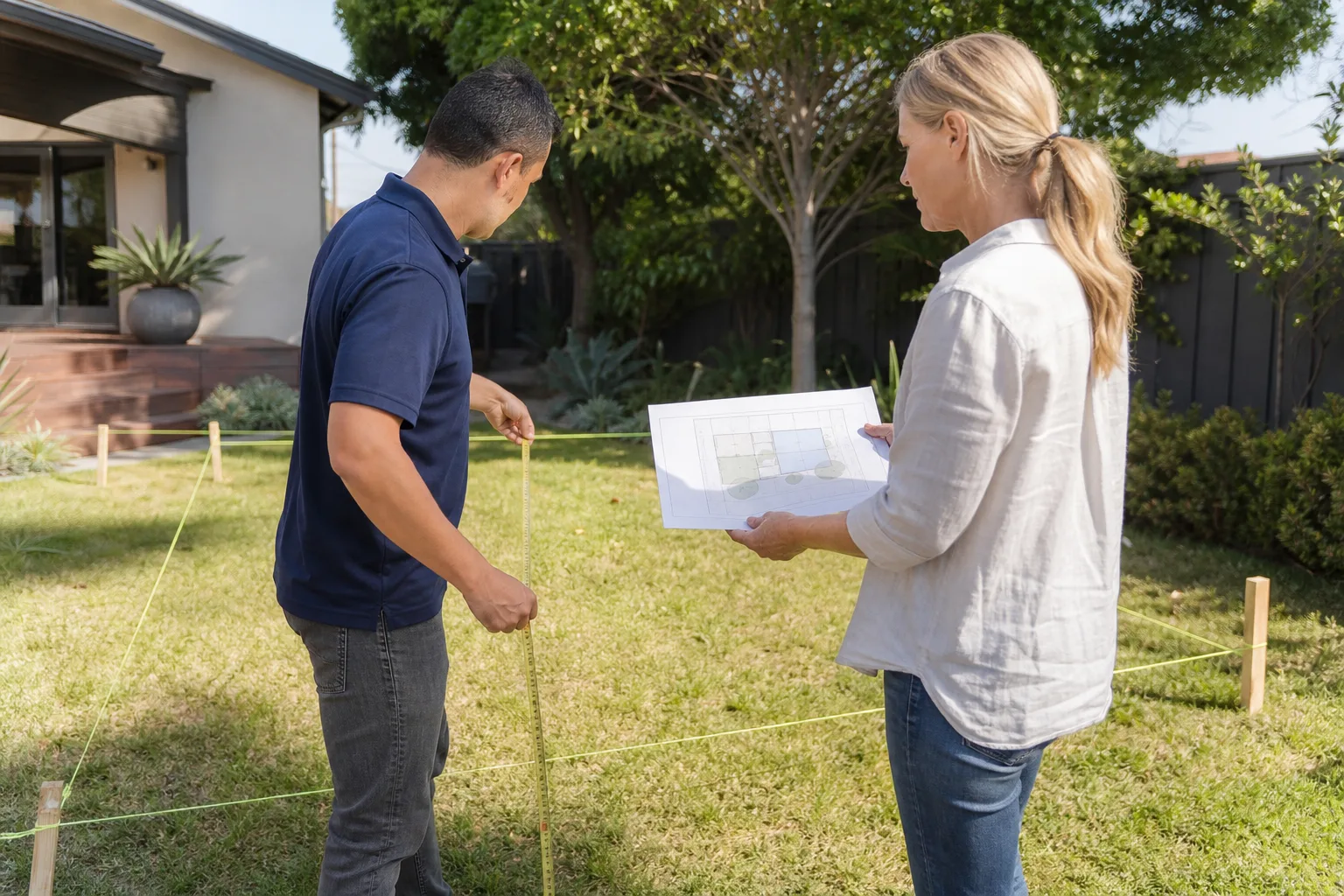
You can split a home addition between a licensed contractor and your own labor and still walk through every inspection clean. The procedure that works in Clark County isn’t complicated, but it’s procedural. Every party needs to be on the same permit and the same inspection schedule.
Here’s the workflow we recommend to homeowners who want to self-perform the finish work:
- Decide the split before you file anything. Separate “licensed trade scope” (foundation, framing, electrical, plumbing, mechanical, drywall, waterproofing) from “owner scope” (paint, trim, cabinets, flooring, landscaping). Once you file permits, changing that split mid-build causes inspection headaches.
- Hire a licensed general contractor or trade subs for the licensed-trade scope. Every trade that requires a license should be on the permit under their own license, even if you’re the owner-builder.
- Pull owner-builder permits in your name only if you’re comfortable owning the entire schedule. Missed inspections, call-back fees, and re-inspections all fall on you.
- Sequence rough-in inspections before you cover anything. Framing, then electrical, plumbing, and mechanical roughs, then insulation, then drywall. Your hands-on finish work starts after the final rough-in sign-off.
- Get the final inspection before you move furniture in. Some insurers won’t cover an addition until the county has signed off. Get the sign-off before you claim the space.
- Keep every permit, inspection record, and warranty in one folder. This is what a buyer’s lender will want to see. It’s also what your insurance claims department will ask for if anything ever goes wrong.
This is the workflow our ADU builders in Enterprise team runs on every project we manage, whether the client is self-performing the finish work or handing us the whole build. The written price and the written guarantee don’t change because of who does the painting. Our technicians have up to 16 years of experience on the licensed-trade side of the build, and our process keeps owner-led projects on the county’s inspection calendar.
What’s Genuinely Safe to Do Yourself in Enterprise
Here’s the short, honest list of what you can safely self-perform on an addition in Enterprise without a permit, a license, or a call-back from an inspector. Stick to these and you’ll save real money:
- Interior painting and trim paint. Prep, prime, and paint after drywall and final inspection. No permits, real savings.
- Cabinet hardware and drawer pulls. A homeowner with a drill and patience can do this in a weekend. No trade involved.
- Interior trim and baseboards. Finish carpentry that’s cosmetic, not structural.
- Flooring over a properly prepped substrate. LVP, engineered hardwood, and floating floors over a level underlayment. Leave tile in wet zones to a pro.
- Closet shelving and dry-bar installation. Cosmetic, no plumbing or electrical changes.
- Finish landscaping and irrigation tie-in at the yard. Safe as long as you’re not touching irrigation that crosses into the foundation or septic scope.
- Furniture, staging, and move-in cleaning. Obvious, but worth naming. Save your labor for the jobs that matter, and hire professionals for anything that requires a permit or a warranty.
Outside this list, run it past a licensed contractor before you pick up a tool. The Lodgewick ADU Builders Enterprise home team answers questions like this on a free estimate call, even for homeowners who aren’t ready to hire. It’s a lot cheaper than the call-back from an inspector.
Common Mistakes to Avoid
- Starting a load-bearing removal before checking the plans. In every Enterprise subdivision we’ve worked in, at least one wall that looked empty was carrying load. Removing it without a beam and post plan can sag the floor above within a season.
- Pulling owner-builder permits and then skipping the rough-in inspection. Inspectors in Clark County cannot sign off on drywalled walls. One missed rough-in can cost you a full tear-out and re-inspection fee.
- Self-performing waterproofing to save $1,000. A failed shower pan in a 400 sq ft addition costs $5,000-$12,000 to repair once the rot is discovered. That’s the trade nobody wants to make.
- Doing electrical work behind a wall without a permit. Insurance carriers deny claims on unpermitted electrical work, and most Enterprise buyers’ lenders will require the panel to be inspected before they fund a loan.
- Keeping the owner-builder permit active for years. Clark County permits have expiration windows and call-back fees. If you’re doing the work slowly, plan the timeline before you file.
- Assuming the guarantee transfers because “the contractor said it would.” Get every warranty in writing, tied to a specific scope, with a named response window. A verbal promise is not a guarantee.
- Never getting the final inspection. A finished addition without a final sign-off is invisible to a buyer’s lender and a red flag to your insurance adjuster. Get the final, keep the record, close the file.
When to Call a Professional
Call a licensed contractor the moment your plan touches electrical panels, load-bearing walls, plumbing rough-ins, gas lines, or wet-zone waterproofing. Call when the work needs a permit and an inspection the county will actually enforce. Call when you want a written price before a single nail is driven, a defined arrival window, and a 365-Day Done Right Promise in writing on every project. That last part is what The Kingswell Guarantee covers: written price first, real arrival window, clean job site, written guarantee on every build, and a free return visit if the work fails within the guarantee period. Lodgewick ADU Builders Enterprise offers free estimates in Enterprise – call (855) 812-7727. A live person answers every call, 24/7, and we don’t do voicemail loops.
Frequently Asked Questions
Yes. Nevada’s owner-builder exemption lets you act as your own general contractor on a home you own and occupy. You can hire licensed subcontractors, pull permits in your name, and self-perform some of the labor. What the exemption does not do is let you self-perform electrical, plumbing, or mechanical work, which still requires a licensed contractor in Nevada. Call (855) 812-7727 if you want a licensed general contractor on the licensed scope while you finish the rest.
Interior painting, cabinet hardware, trim and baseboards, flooring over a properly prepped substrate, closet shelving, and finish landscaping are the safest DIY tasks. None of them require a permit or a licensed trade. Everything structural, electrical, plumbing, mechanical, and wet-zone waterproofing should stay with a licensed contractor and a permit. Call (855) 812-7727 to check a specific task before you start.
Three things. First, the work doesn’t exist as far as a buyer’s lender is concerned, which can stall or kill a sale. Second, your homeowner’s insurance can deny a claim tied to unpermitted work. Third, the county can require you to bring the work into compliance retroactively, which usually means opening walls and redoing it. A permit and inspection record is the cheapest insurance you’ll ever buy on an addition. Call (855) 812-7727 to talk through the permit sequence.
Between $3,000 and $7,000 on a typical addition when you handle paint, trim, cabinets, flooring, and landscaping yourself. The savings are real, but they’re concentrated in finish labor, not structural scope. DIY structural work looks like a savings on paper and usually costs more in repairs, inspection re-dos, and insurance denials. We’ll put the split for your specific project in writing on a free estimate – call (855) 812-7727.
Unpermitted structural work and unlicensed trade work can void a claim when the damage ties back to that work. The insurance issue isn’t DIY itself. It’s DIY that skipped a permit, a licensed trade, or an inspection. A clean permit file and a licensed contractor on structural scope keep your policy intact. Call (855) 812-7727 and we’ll tell you exactly which scopes need to be on a licensed permit.
Owner-led finish work usually adds two to six weeks versus a fully contractor-led build, mostly from weekend-only labor and the permit scheduling that goes with it. The licensed-trade scope itself (foundation, framing, rough-ins, drywall, waterproofing, final inspection) typically stays on the same timeline regardless of who does the paint. Call (855) 812-7727 for a written schedule with a real arrival window before you commit to a split.
The Bottom Line
Nevada lets you be your own general contractor, but it doesn’t let you rewire your own panel or remove a load-bearing wall. Finish work in Enterprise is genuinely yours if you want it: paint, trim, cabinets, flooring, and landscaping can save you $3,000-$7,000 on a typical addition. Structural work, electrical, plumbing, and wet-zone waterproofing stay with a licensed contractor and a county permit, and that boundary is exactly what keeps your insurance valid, your resale clean, and your family safe. Every commitment we make on the licensed scope is in writing before the first nail is driven. That’s The Kingswell Guarantee, and it’s the standard every Lodgewick ADU Builders Enterprise project runs on. The name says what we build: a lodge is a small house on a larger property, which is exactly what an ADU is. If you want the licensed scope quoted with a real dollar range and no surprises at the door, call (855) 812-7727 for a free estimate.
Written by the team at Lodgewick ADU Builders Enterprise.